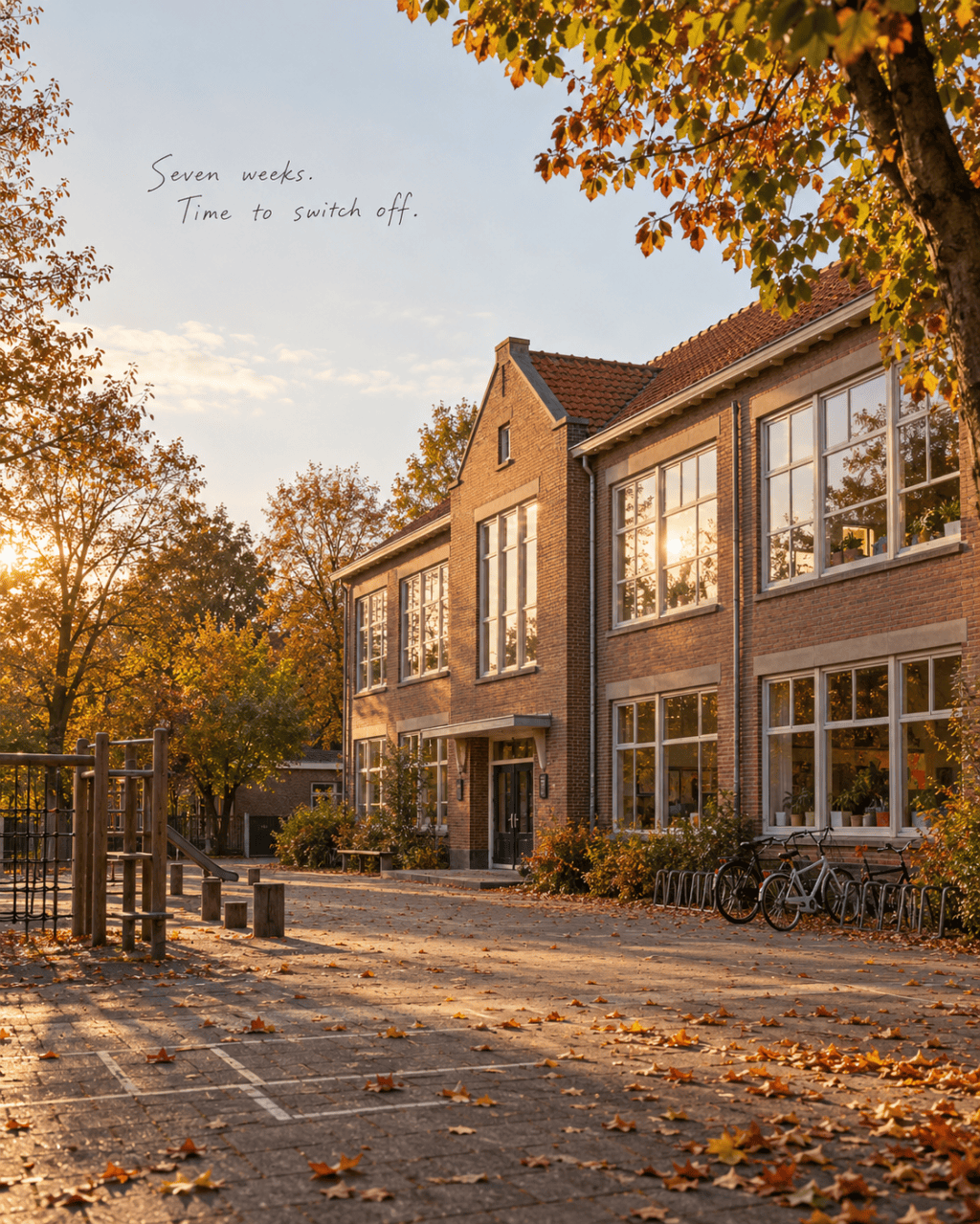
There is something rather peculiar about working in education. We seem to measure our lives in blocks of approximately seven to ten weeks, with a holiday at the end of each one. It’s not that we spend every working day counting down to the next break, although I won’t pretend the occasional glance at the calendar doesn’t happen, but somehow an entire school year passes in a series of beginnings, endings and conversations about how it can possibly be October already.
And here we are. Seven weeks into the school year, autumn half-term has arrived, and I am tired.
Not the sort of tired where I want to abandon my career, move to a remote cottage and communicate exclusively with woodland animals. More the sort where I look back at everything we’ve done since September and think, well, that was quite a lot, wasn’t it?
This year started a little differently. After several years of sharing responsibilities within the school’s leadership, some changes meant that I would be taking on the director’s role on my own again. In practice, I’d already been doing much of it for quite some time, so you might think the transition would feel perfectly natural.
Apparently my brain hadn’t received that memo.
The moment it became official, I found myself wondering whether I could actually do it. Which is an interesting question to ask yourself when you have already been doing the job for years, know the school inside out and have an excellent management team around you. Nevertheless, there I was, briefly behaving as though someone had handed me the keys to a building I’d never visited and wished me the best of luck.
What made the transition more complicated was that the preceding period had taught me something about myself that I probably should have learned a little earlier.
I have always considered myself reasonably good at difficult conversations. If something isn’t working, I would much rather sit down with somebody, talk about it properly and work out what needs to change than allow it to become the elephant in the room that everybody has to manoeuvre around during staff meetings.
I don’t particularly enjoy those conversations, obviously. Nobody wakes up in the morning hoping to have a challenging performance discussion before lunch. But I believe people generally want to do their jobs well, and most of the time, when you approach things openly and respectfully, you can get somewhere together.
What I hadn’t fully appreciated was how much harder that becomes when you care about somebody personally.
Over the years, there had been a working relationship in which the professional and personal sides had gradually become more difficult to separate. There were circumstances I understood, challenges I wanted to accommodate and moments when I thought giving things a little more time was probably the kindest thing to do. And sometimes it was. But looking back, I can also see that I occasionally confused being understanding with postponing a conversation that still needed to happen.
Which is rather inconvenient when you’re supposed to be the director.
The strange thing about leadership is that you can genuinely like somebody and still need to tell them something they won’t particularly enjoy hearing. You owe them that honesty, just as you owe it to everybody else. I know that perfectly well in theory. I can probably explain it quite convincingly to another school director over coffee. Applying it to myself turned out to be slightly less straightforward.
It’s one of the reasons I’ve become more careful about forming close friendships at work as my responsibilities have grown. There are plenty of colleagues I could happily spend an evening with outside school, and we certainly have a lot of fun together, but being the person who ultimately has to make decisions about somebody’s work changes the relationship. I want to be able to have a difficult conversation without either of us wondering what it might mean for Saturday’s dinner plans.
And yet, despite being aware of all that, I discovered that I had allowed personal consideration to influence how I handled a professional situation.
Not my finest discovery, but probably a useful one.
It also reminded me that two perfectly decent people aren’t automatically a good professional match. Somebody can have excellent qualities, work hard and genuinely mean well, while the way you function together still doesn’t bring out the best in either of you. I recognise that in myself too. There are people I like enormously whose working style somehow activates every insecurity I’ve spent years pretending I no longer have.
You can try to understand those differences, talk about them and find a better way forward, but sometimes you also have to acknowledge that understanding somebody doesn’t necessarily mean you work well together.
Anyway, changes happened, responsibilities shifted, and September arrived.
And after that initial moment of wondering whether I could manage everything, something rather lovely happened.
I started enjoying myself.
I mean, I was already enjoying my work, but there was suddenly a clarity I hadn’t realised I’d been missing. I knew which decisions needed making, which conversations were taking place and who was responsible for what. If something came up, it came to me, I could deal with it or pass it to the right person, and I knew it would be followed through.
I don’t mean that I’ve developed an irresistible desire to supervise everybody’s every movement. Nobody needs a director appearing behind them to ask whether they’ve completed the task discussed seventeen minutes earlier. I have a management team who are more than capable of running with things themselves, and I am incredibly grateful for them.
But my head feels different. I’m involved in the things I need to be involved in, and the rest is in good hands. I hadn’t realised how much mental space that uncertainty had been occupying until it wasn’t there anymore.
The past few weeks have been full. I’ve had a considerable number of development conversations with colleagues, which are wonderful but also require your brain to remain switched on for rather a long time. We’ve made decisions, solved problems, planned ahead and dealt with the usual collection of things that can happen when several hundred children and a large number of adults occupy the same building every day.
There have been long days, but I’ve come home feeling tired in a way I actually rather like. The work has taken energy, certainly, but it’s given me quite a lot back too.
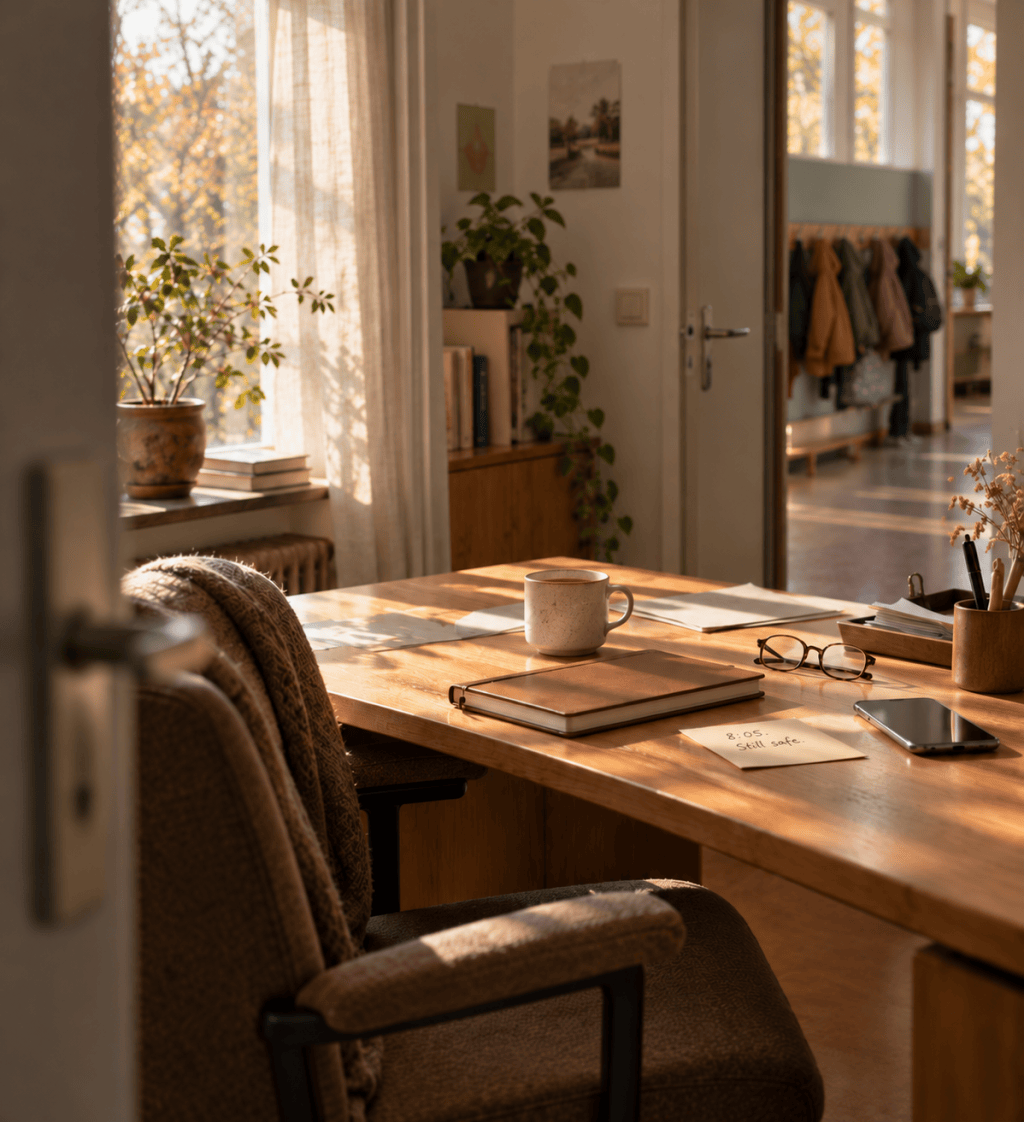
I’ve also rediscovered how much I appreciate having Fridays to work from home. During the rest of the week, I can be properly present at school, have conversations, walk into classrooms and deal with whatever comes my way. Then Friday gives me a chance to sit down with my laptop, finish things that require actual concentration and occasionally experience the extraordinary luxury of completing an entire thought without somebody appearing in the doorway.
It turns out I rather enjoy being the person who knows what’s going on. Who knew? Apart from, presumably, everybody who has ever worked with me.
Of course, none of this means I’ve suddenly become an exceptional director who will never make another mistake. I’ve already identified a few things I would handle differently next time, particularly when it comes to having difficult conversations sooner rather than allowing good intentions to become an excuse for waiting.
But I feel more like myself at work again, and that has been a very pleasant surprise.
So now it’s half-term. Seven weeks have somehow disappeared, the weather has finally remembered it’s supposed to be autumn, and I have a whole week in which nobody needs me to make decisions about staffing, timetables or anything involving a school building.
And the lovely thing is, I have absolutely no trouble switching off. School will still be there when I get back, along with everything that needs doing. For now, I’m perfectly happy to let somebody else make the difficult decisions. Preferably somebody behind a coffee machine who can tell me which cake is particularly good today.
-Sophie Quinn




Leave a Reply