
Lately I’ve been thinking about how strange it actually was that my mother almost never came along to things, because as a child it never seemed strange to me at all. It was simply how our family worked and therefore automatically normal, the way children assume every household on earth functions exactly like their own until they get older and suddenly realise other people grew up in completely different atmospheres with completely different parents.
In our family, my father was almost always the one who came with us. He came to tennis lessons, competitions, swimming pools, theme parks, beach days, holidays, Center Parcs weekends, and basically every activity that involved children losing shoes somewhere or getting wet unexpectedly. Meanwhile my mother was usually at home, which sounds much sadder written down than it actually felt as a child, because my mother was never absent in the sense that she did not care. Quite the opposite actually. My mother was the person making sure life itself continued functioning in the background.
She made sure towels were packed, food was ready, sunscreen existed, clothes were washed, bags magically appeared near the front door at the exact moment they needed to, and that we somehow always left the house with everything we needed without any of us really understanding how much work that probably was.
My father was simply the parent who physically came along.
And honestly, i think he loved it too.
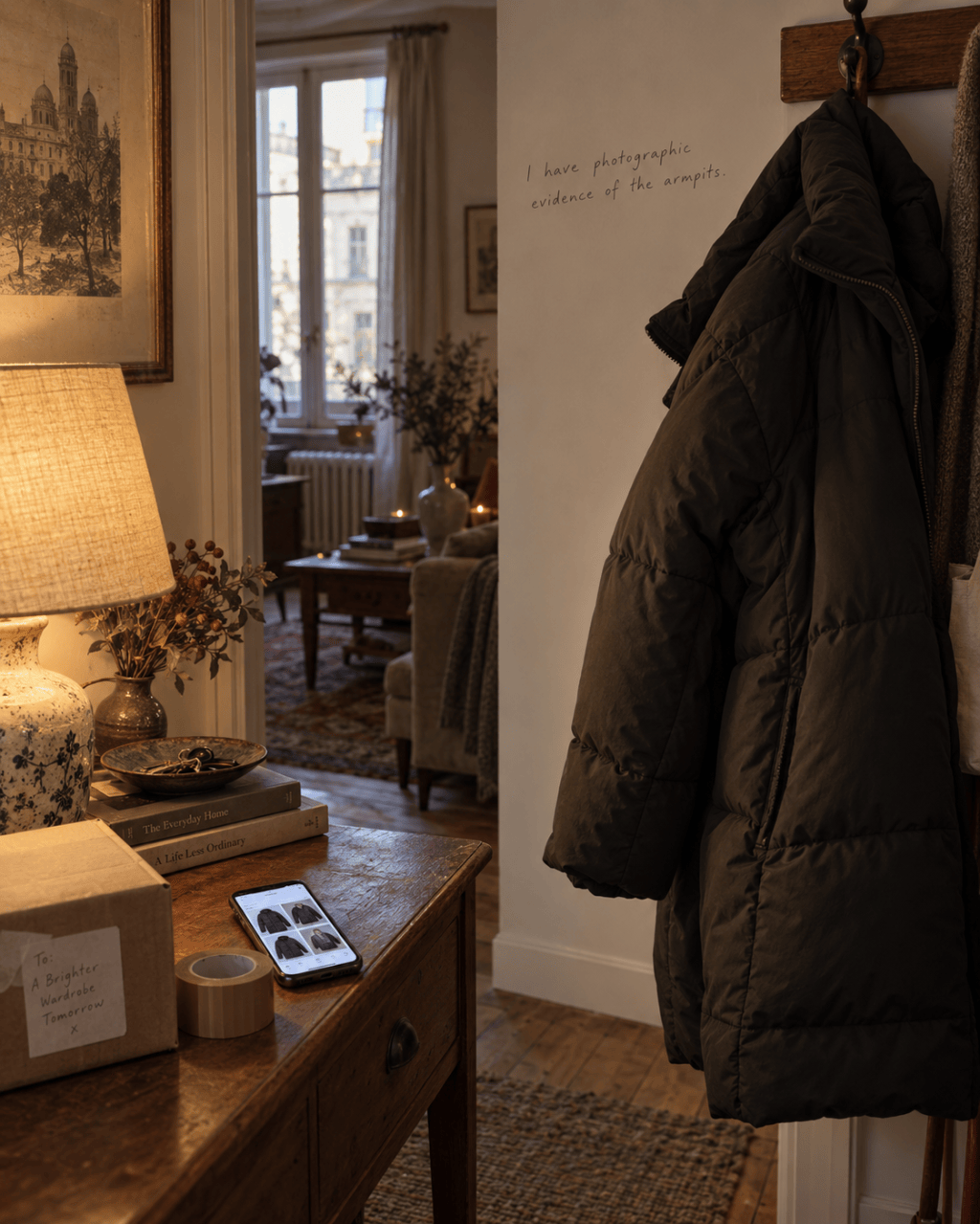
That man had endless energy for activities. I still remember sitting behind him on the bike during winter on the way to tennis practice, hiding against his coat because it was freezing outside and because somehow parents in the nineties genuinely believed children should simply develop resistance against weather through exposure.
And I loved that.
I also remember holidays at Center Parcs, where there was this wild water slide with a glass section underneath it so people walking by could see you swim through the tube, and apparently my parents had coordinated that my mother would walk past underneath at a certain moment so we could wave at her while swimming through the water like excited little idiots.
And somehow that is exactly the kind of memory that stays with you.
Not because it was important in some grand emotional sense, but because childhood is strange like that. You don’t remember the relationship dynamics or who carried what weight inside a marriage, you just remember that your mother timed the waving correctly and that your father was somewhere nearby in swimming shorts looking far too comfortable in chlorinated subtropical heat.
Only now, years later, do I sometimes realise that a lot of my friends’ mothers actually did come along to things, while in our house the roles seemed more divided. My father worked fulltime and still somehow remained the parent constantly standing next to tennis courts or swimming pools, while my mother carried the home side of life almost entirely by herself.
And maybe that was simply more normal for their generation.
My mother was born in ’49. People forget sometimes how much family structures have changed in just a few decades, and how many things existed inside marriages that nobody really questioned because that was simply what life looked like back then.
I also think children often fail to notice the invisible work parents do until they become adults themselves.
As a child, I mostly experienced life as: everything works.
Only later do you realise somebody was constantly making that happen.
And honestly, I don’t even write this from a place of blame, because despite everything that later happened in our family, despite the fact that I no longer have contact with my mother or one of my sisters, I still know my mother loved me.
That part is not complicated to me.
Families can break apart and still contain love somewhere underneath all the damage, misunderstandings, pride, hurt and history. People sometimes need someone to become the villain eventually, but real families are usually much messier and much sadder than that.
I had a good childhood.
There was food, structure, holidays, freedom, care, stability, and after my father died when I was thirteen, my mother genuinely did try to keep life going for us. Friends could always come along on holiday, I was trusted to go places, trusted to make choices, trusted to slowly become my own person.
And yet adulthood does make you revisit certain memories differently.
Not necessarily because your childhood changes, but because your understanding of people changes.
You suddenly start noticing things your child brain never questioned before. Certain comments. Certain silences. Certain ways your parents spoke to each other, or didn’t. The ways people carry insecurities into a marriage without even realising it anymore because they themselves probably grew up inside similar dynamics.
One of my friends once said to me: “Your mother could sometimes be a little harsh.”
And I remember feeling uncomfortable hearing it, partly because I knew there was truth in it and partly because it still felt protective somehow, because no matter how complicated family becomes, there is still a part of you that remembers being loved by that person.
And I also know that love does not always arrive in the same form.
Some parents hug constantly. Some parents talk endlessly about feelings. Some parents quietly make sure you are fed, clothed, protected and picked up on time for years without ever really saying much about it.
And maybe that is also why I still miss my father sometimes in very ordinary moments, because grief changes as you get older. When you are younger it feels enormous and shocking and impossible. Later it becomes strangely practical. It becomes missing the person who would have come along to things, who would have stood next to the tennis court, who would have cycled with you through the cold while you hid behind his coat half asleep on the back of the bike.
Those are the moments that stay.
And I think growing older is partly realising that most parents were probably also improvising the entire time, trying to build a family with whatever emotional tools and examples they themselves had inherited, while their children quietly sat there assuming all of it was simply normal life.
-Sophie Quinn



Leave a Reply