At some point in life (and sometimes embarrassingly early), you realize the world isn’t following the same script you are.
The script that told you what was normal, what was polite, what was absolutely forbidden.
I grew up thinking everyone lived by the same rules.
Like: you don’t vacuum on Sundays.
You thank someone so many times for dinner you sound like a broken record.
And if a car stops for you at a crosswalk, you nod and pick up your pace, just a tiny jog, enough to say I respect your time, stranger.
Apparently not everyone got that memo.
These rules weren’t written down anywhere; they were just there.
Before friends came over, the house had to be polished into a museum.
At someone else’s table, I was suddenly the most well-behaved child alive, saying thank you as if auditioning for sainthood.
And you never-ever called a friend’s house after 9 p.m. That was basically knocking on the door of hell.
Some rules were more mysterious. Like when I asked my mother what we were having for dinner and her default answer was always, potatoes, vegetables, meat. Even when it was rice. Even when it was soup. I think she just hated the question.
Then there were the rules that belonged to that specific time.
Renting a movie at the video store, the squeak of the linoleum floor as you walked in, holding the plastic case like treasure all the way home.
Playing outside until 4:00 p.m. sharp, when Disney TV started.
Biking across town to knock on someone’s door just to see if they were home. No text, no WhatsApp, no location share, just a gamble.
Or drying the dishes while secretly reading the diet list taped inside the cupboard door.
Sundays meant a big family breakfast; Saturdays meant groceries.
And then there are the invisible rules of relationships.
Some people live by: If you’re upset, talk about it.
Others: Pretend everything’s fine until someone explodes.
Both camps are convinced their way is the obvious, correct one. Which makes dating across those borders… educational.
The thing about these “universal” rules is, they’re not. They’re training wheels for belonging, until you discover the world is full of people performing completely different plays.
So I’ve kept the rules I actually want.
Birthdays require cake, and you get to choose your meal, even if you’re celebrating alone.
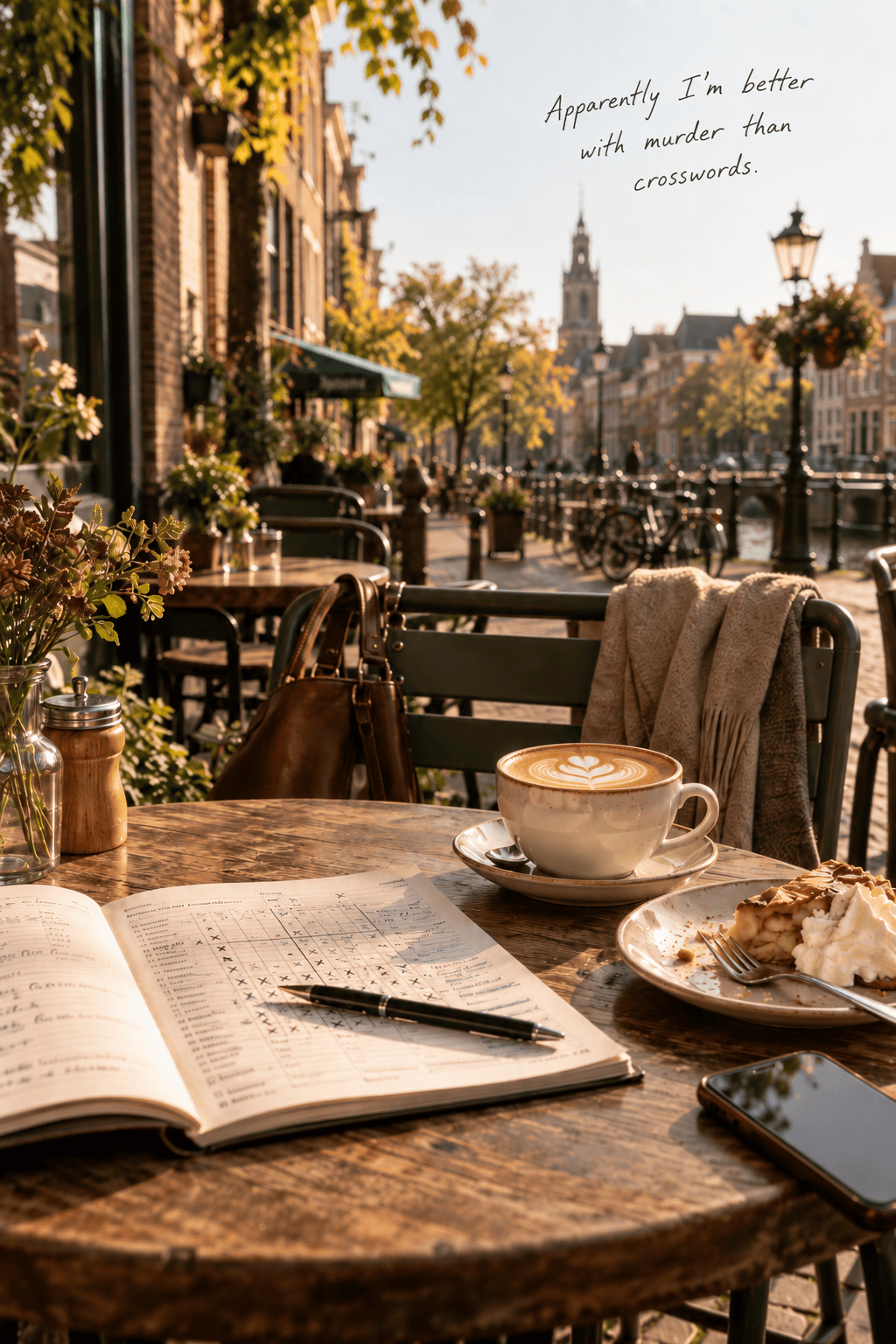
You don’t buy a coffee machine at home, because six lattes a week at your favorite café are part of your religion.
And if someone stops for you at the crosswalk, you still jog and nod. Because that one feels like the right kind of universal.
And don’t get me started on international scripts. Europeans are already different enough, Dutch people say things straight, others dress the truth up in stories….but Americans… Americans are another planet.
In the U.S., they greet you in a shop with “Hi, how are you?” The first time, I panicked and answered honestly. Then I realized it was just a ritual, like saying abracadabra. Now I fantasize about replying “Terrible. Let me tell you everything,” just to see what happens.
Also: in America, if you eat alone, they seat you at the bar. In the Netherlands, you just get a table. Unless it’s really busy. Which says a lot, I think, about how each culture views solitude.
In the end, everyone is following their own strange little script. Some rules survive, some disappear, and some just don’t make sense anywhere else.
But me? I’ll keep jogging at crosswalks. Because I like to believe at least one thing can stay universal.
– Sophie Quinn

2 responses to “The Rules I Thought Were Universal (But Aren’t)”
-
Rules as ‘training wheels for belonging’, wonderful, and yes, you’re absolutely right. A few are pretty much universal, others we get to pick and choose – and change, if and when required. Oh, and I also do the little mock-jog when crossing the street to indicate that I value the other person’s time.


Hello,
I’m Sophie Quinn

I write from cafés, quiet corners, and whatever moment I’m still mentally processing three days later.
Some people journal.
I write blog posts and call it coping.
This space is where I collect the almosts, the thoughts I should’ve kept to myself, and the kind of stories you only tell when no one interrupts you.
Welcome to Diary of Almost Everything.
Feel free to read along, just don’t ask me to summarize anything out loud.
Let’s connect
Diary entries, delivered!
Updates when new stories go live. Soft Chaos, no pressure, zero spam.



Leave a Reply